
Visibility and Safety After Sunset
Outdoor Lighting in Whitehall for properties requiring safe pathway navigation, security visibility, and functional outdoor spaces after dark
Pathway lighting transforms how safely you move around your property when you return home after sunset or need to access outbuildings during Montana's long winter evenings. Arthur Construction installs exterior lighting systems including landscape lighting, security lighting, and accent lighting that address specific visibility needs rather than simply adding brightness. You'll find this matters most when steps, grade changes, or uneven surfaces create trip hazards that disappear in darkness, or when you want to monitor activity around entry points and driveways.
Exterior home lighting involves more than fixture placement—it requires understanding light levels that provide visibility without creating glare, choosing fixtures rated for temperature extremes, and running wiring that stays protected underground where frost heave and settling occur. Each lighting zone serves a different purpose, whether that's illuminating walkways, highlighting architectural features, or providing security coverage.
Request a detailed estimate based on your property layout and specific areas where visibility currently presents challenges.
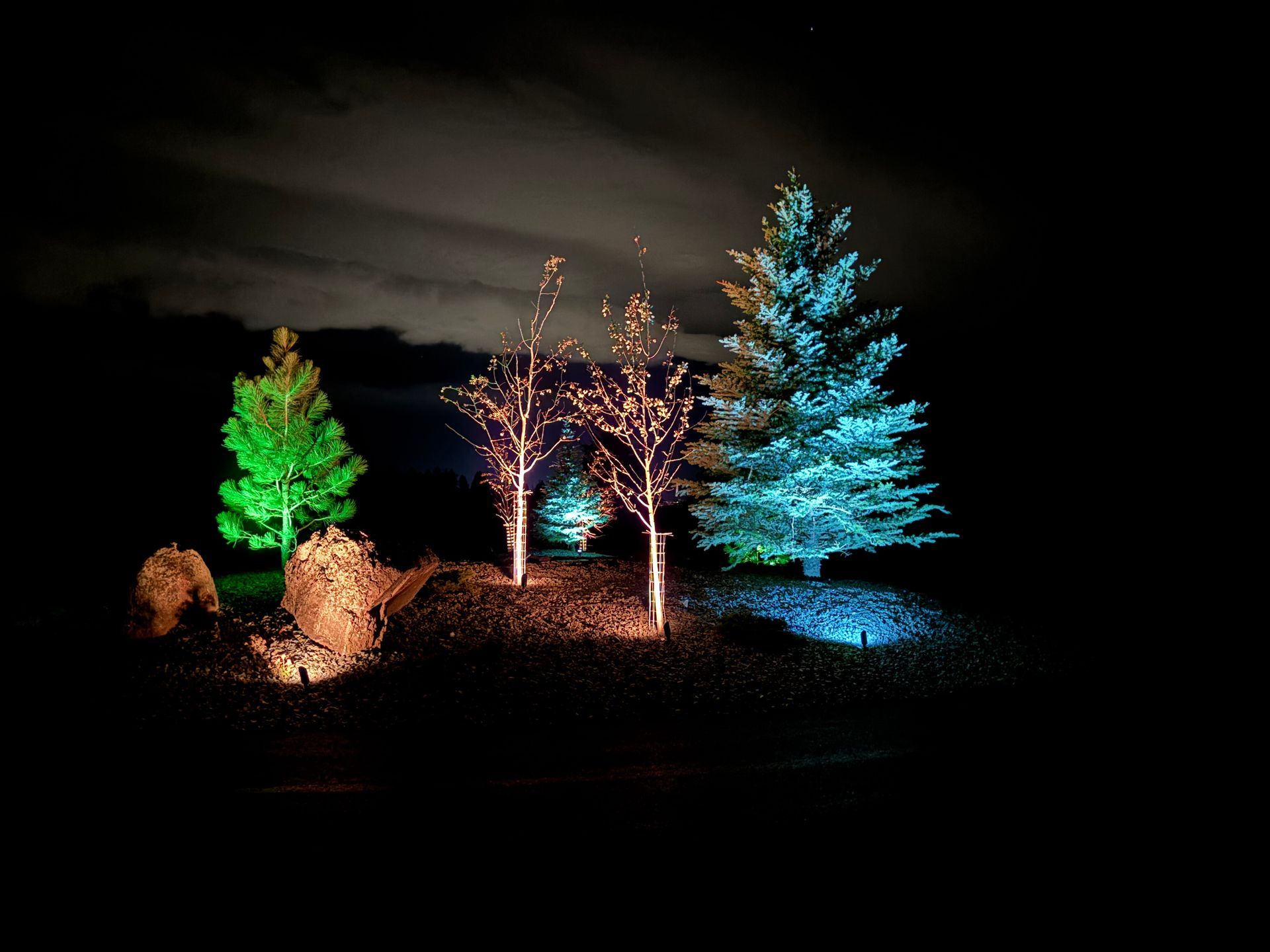
What You Notice Once Lighting Is Installed
Outdoor lighting installation begins with wire trenching deep enough to stay below frost line, preventing the cable damage that occurs when shallow wiring shifts with freeze-thaw cycles. Arthur Construction positions fixtures to eliminate dark zones along travel paths while avoiding light spill into windows where it would disrupt interior spaces.
After installation completes, pathways become clearly visible from the point you step outside, eliminating the hesitation that comes from navigating uneven ground in darkness. Entry areas stay lit without needing to leave porch lights on all evening, and landscape features you invested in remain visible after sunset rather than disappearing completely. Security coverage improves because motion-activated fixtures reveal activity in areas previously hidden by shadow.
Fixture selection includes LED options that maintain output in cold weather versus halogens that dim when temperatures drop, and choices between line voltage systems that deliver consistent brightness across long runs versus low-voltage systems that use safer wiring but require more careful planning to prevent voltage drop.
Answers to Frequent Service Questions
Property owners considering outdoor lighting typically want to know how systems hold up in Montana winters and what functionality different approaches provide.
What wiring depth prevents frost damage in Whitehall?
Trenches should reach at least eighteen inches to stay below the frost line that typically extends twelve to sixteen inches down, with deeper burial in areas where heavy equipment traffic compacts soil.
How do you prevent glare while still providing adequate light?
Fixtures get positioned below eye level along pathways and use shields that direct light downward, creating visibility on walking surfaces without shining directly into sight lines.
When should security lighting use motion activation versus constant illumination?
Motion sensors work well for areas you access occasionally, saving energy while still providing coverage, whereas constant lighting makes sense for main entries and high-traffic zones where you want continuous visibility.
What fixture types handle temperature swings best?
Cast aluminum and copper fixtures withstand expansion and contraction better than plastic housings, and fully sealed lens assemblies prevent condensation that fogs covers when warm interior air meets cold Montana nights.
How does landscape lighting affect plant growth near fixtures?
Fixtures positioned more than two feet from plant centers minimize impact on photoperiod-sensitive species, and uplighting from ground level creates visual interest without directing heat onto foliage.
Arthur Construction designs lighting layouts that address your specific property features and usage patterns. Schedule a property evaluation to identify areas where improved visibility would increase safety and functionality throughout the year.